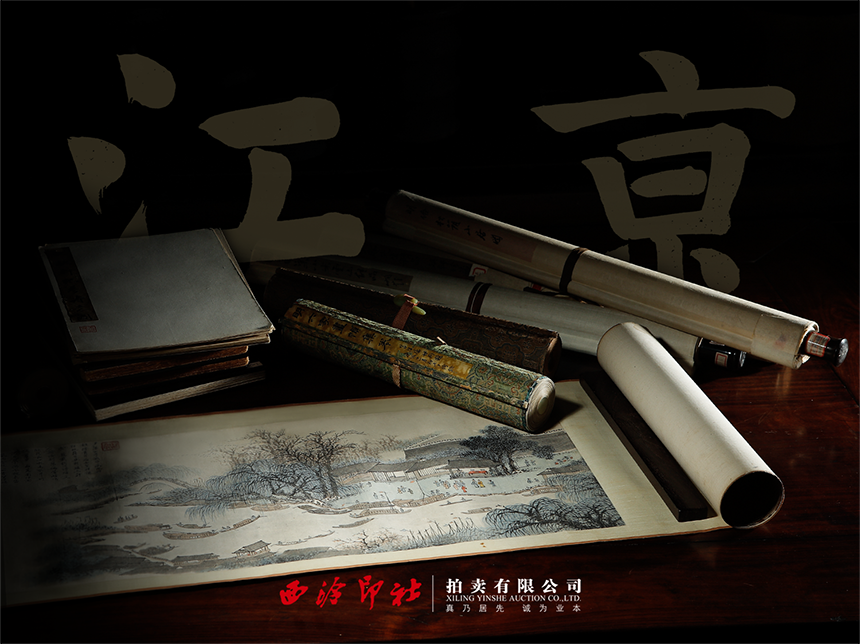
Zhenjiang, also known in the antient times as ‘Jingjiang’, ‘Jingkou’ and ‘Dantu’, and containing a wealth of historical and cultural background, was the place where Mi Fu resided in his later years, and drew plenty of inspiration to form his own thoughts to establish the Jingjiang School of painting.
Mi commended Zhenjiang as ‘The Urban Forest’, which precisely depicted the cultural city as a unique combination of an urban and the nature. Zhang Yin, the first advocator of Jingjiang School, and Wang Wenzhi, a literary leader, compiled the Chronicles of Dantu County together, a vivid introduction to their common hometown and meanwhile an annotation integrated with inheritance, innovation, poetry and realism throughout the development of the Jingjiang School.

LITERARY LEADER IN JINGJIANG
WANG WENZHI
Created in the August of 1796, the album was dedicated to Luo Qilan who was a female disciple of Yuan Mei, Wang Wenzhi and Wang Chang, and owned a studio dubbed ‘Ting Qiu Xuan’. Luo composed poems around ‘Dreams’, and others wrote them down and illustrated, and that was how Luo Qilan's ‘Ji Meng Shi’ was completed.
Wang Wenzhi inscribed and prefaced Luo's works, while Pan Simu, a Jingjiang School painter painted eight sceneries from these eight poems. Adding the inscriptions written by Yuan Mei, Zeng Ao, Pan Yijun and Wu Yun subsequently, the album contains the inscriptions almost from the same period.
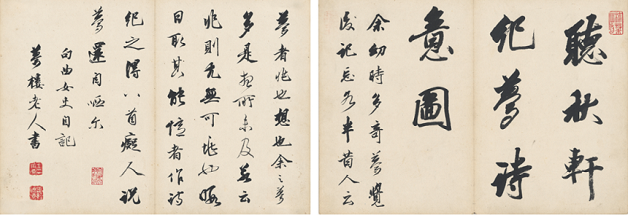

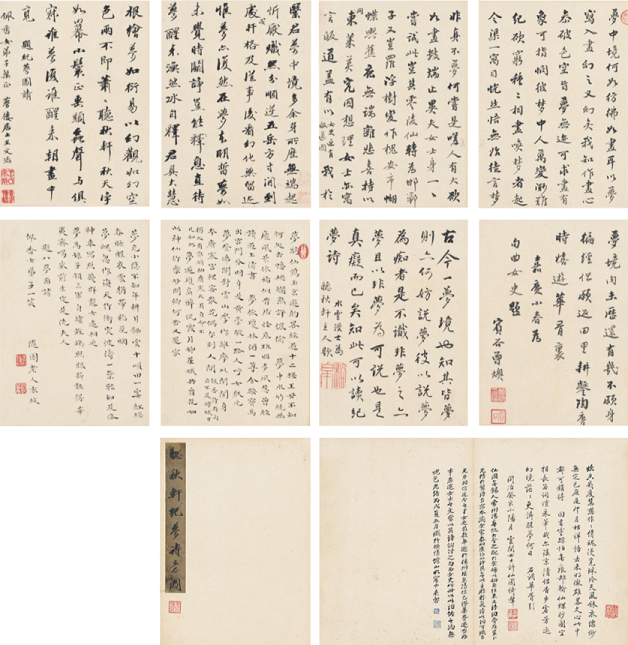

Xiling Yinshe 2023 Autumn Auction
Wang Wenzhi and Pan Simu
Sceneries from Ji Meng Shi of Ting Qiu Xuan
Ink and color on paper·Ink on paper, album (thirty-two pages)
30×21cm×4 23.5×17cm×26 30×21cm×2
With an impeccable provenance, the album also contains Yuan Mei's inscription which is a classic piece in regular script by the master in his later years. In 1866, the album was collected and inscribed again by Zong Yuanhan, and then by his friend Shen Wu in subsequence. As such the lot which was mounted in the Republic of China period remains in good condition.

Titled by Wang Wenzhi
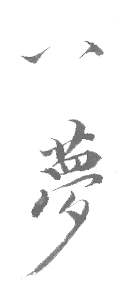
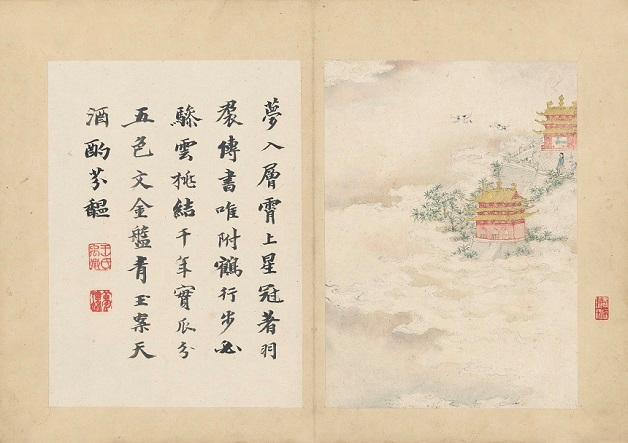
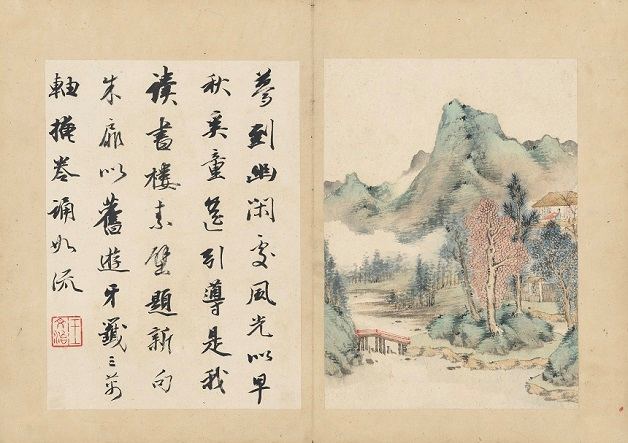
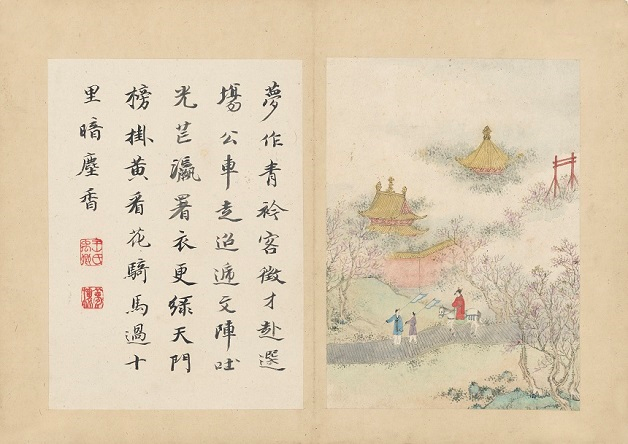
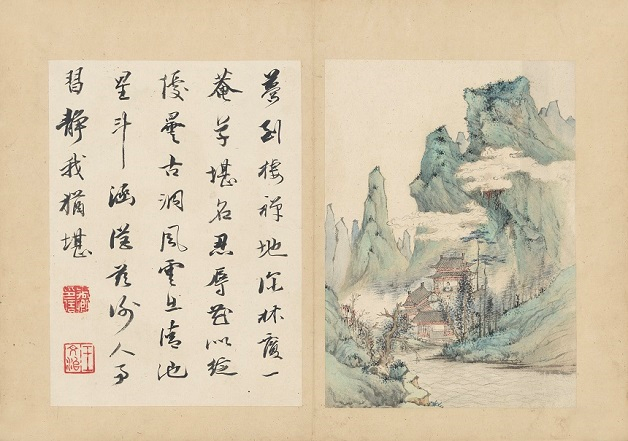
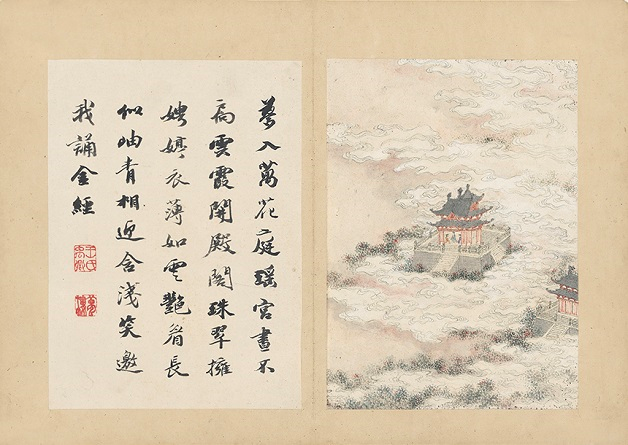
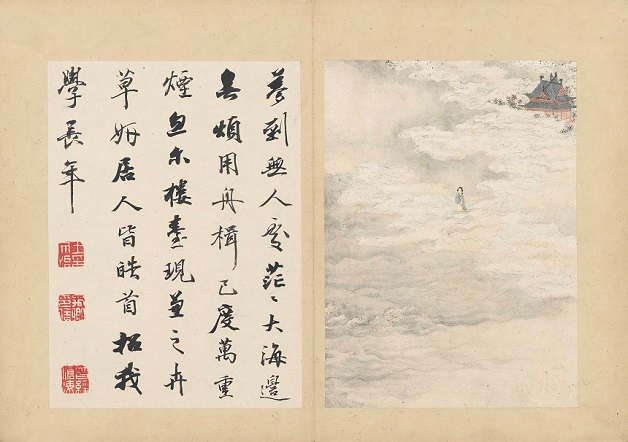

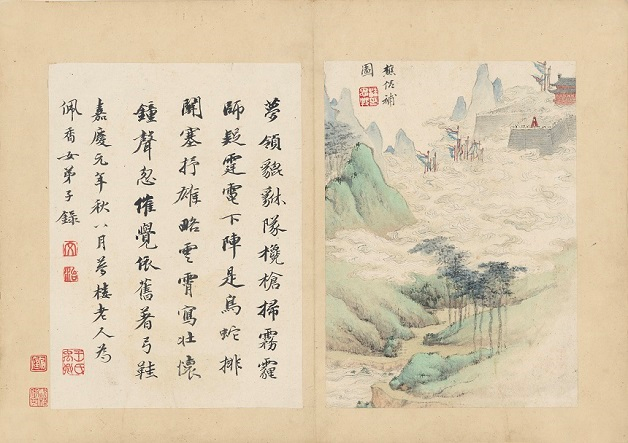
Pan Simu's light-colored and finely depicted landscape painting perfectly fits Luo Qilan's poems. And both are echoed by Wang Wenzhi's charming calligraphic handwriting.
As a leader in the Jingjiang's literary circle, Wang Wenzhi earned himself great prestige in and out of the court, imposing unneglectable influence upon other painters in the city. Therefore, Wang is widely recognized as the founder and pioneer of the Jingjiang School.

Wang Wenzhi (1730-1802), courtesy name Yuqing, also styled himself as ‘Menglou’and owning a studio called ‘Shiyeshanfang’, was a native of Zhenjiang, Jiangsu. He ranked the third in the imperial examination in the twenty-fifth year of Qianlong period, and was appointed as the magistrate of Yao'an in Yunnan. Excellent at calligraphy, Wang was respected as one of the four masters apart from Weng Fanggang, Liu Yong and Liang Tongshu.

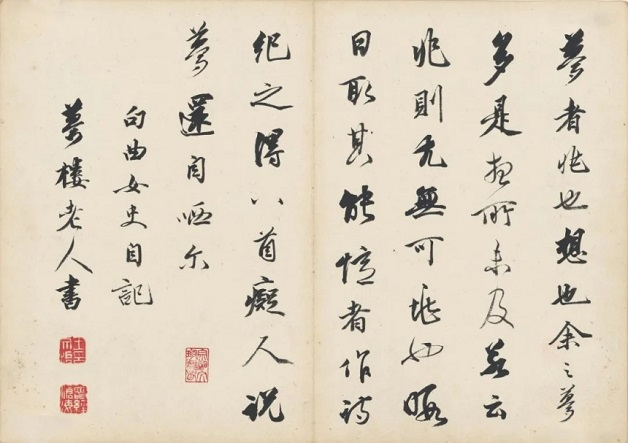

Inscription and preface by Wang Wenzhi for Luo Qilan's Ji Meng Shi
Wang Wenzhi contributed eight poems and inscriptions, which was considered as such a rare move. As a leader of the Jingjiang School. Wang's creations for his female disciple is an evidence of how he valued her.

Comparing to other female poets, Luo Qilan had a life full of ups and downs despite her elegant family background. However, the interaction with Yuan Mei and Wang Wenzhi made her more active in social activities.
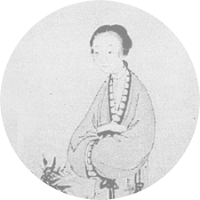
Luo Qilan (Qing Dynasty), female, courtesy name ‘Peixiang’ and also styled herself as ‘Qiuting’. As wife of Gong Shizhi in Jiangning, Luo used to learn poems from Yuan Mei and left her work Ting Qiu Xuan Shi Gao.
Luo Qilan's Ting Qiu Xuan Shi Ji contains 6 volumes and were block-printed and collated by Wang Wenzhi. The lot was also inscribed by Yuan Mei, Wang Wenzhi and Zeng Ao later, who also wrote prefaces for the poem collection.
Among the poems, Ting Qiu Xuan Zeng Yan contains poem inscriptions by as many as 106 scholars and literati, including Yuan Mei, Wang Wenzhi, Bi Ruan, Yao Nai, Zhang Wentao, Fa Shishan, Wu Xiqi and Zhao Yi, who were representatives in political, academic and cultural circles between Qianlong and Jiaqing periods.
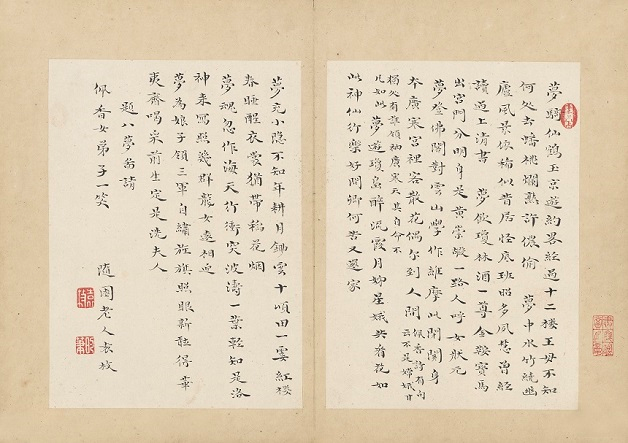
The inscription wrote by Yuan Mei was made in Yuan's eighty's, including eight poems corresponding to Luo's.
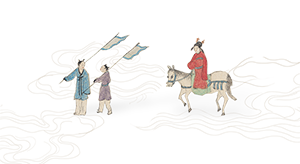
This picture was painted by Pan Simu, younger brother of Pan Gongshou who introduced him to Wang Wenzhi. Same as his elder brother, Pan Simu left few inscriptions wrote by himself, but more by Wang instead.
Pan Simu was a long-lived painter, and his creation almost spanned the entire history of Jingjiang School. As one of the major artists in Jingjiang, he enjoyed the same reputation with Zhang Yinn and Gu Heqing.
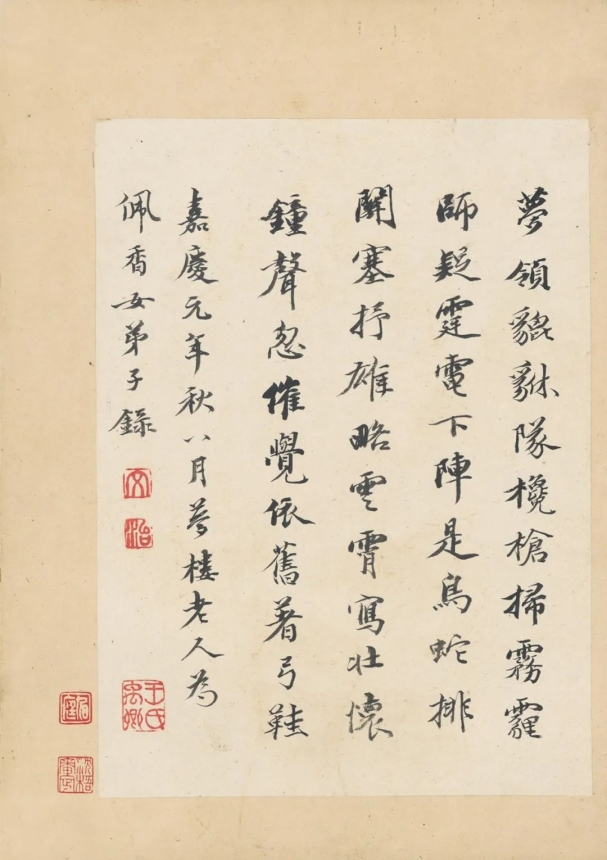
The rarely seen Wang Wenzhi's inscriptions and eight poems containing such a great deal of words
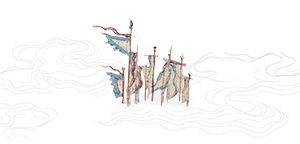
The lot was inscribed by famous masters with impeccable provenance. Yuan Mei's inscription was included in the third volume of Ting Qiu Xuan Zeng Yan, which is a classical regular-script piece created by him in his later years. The long inscription which made in his eighty's witnessed his sincere and close relationship with Luo Qilan.

Yuan Mei (1716-1797), courtesy name ‘Zicai’, also styled as ‘Jianzhai’, ‘Cangshan Jushi’ and ‘Suiyuan Laoren’, is a Hangzhou native.
Yuan obtained the title of Jinshi in the fourth year of Qianlong period and then served as a magistrate in Jiangning and other places. His work includes Xiao Cang Shan Fang Ji, Sui Yuan Shi Hua, etc.
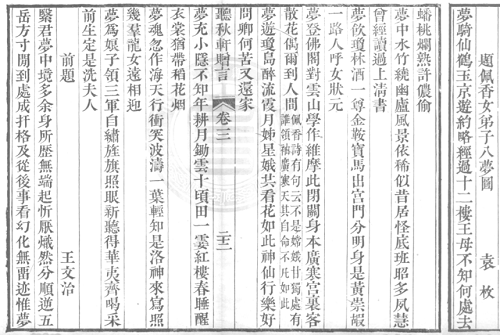

Third volume of Ting Qiu Xuan Zeng Yan, wrote by Luo Qilan (Qing Dynasty)
Block-printed by Gong in Jinling in 1795
Zeng Ao and Pan Junyi also inscribed the lot. And then, in 1863, Wu Yun and Xu Xianpu joined in, followed by Zong Yuanhan who inscribed it in 1866. Zong's inscription talked about Xu Xianpu's life and praised the lot. Later the album was collected by Shen Wu, a friend of Zong Xiangwen. Mounted in the Republic of China period with old cloth cover, it has been kept in good condition, worth of collection.
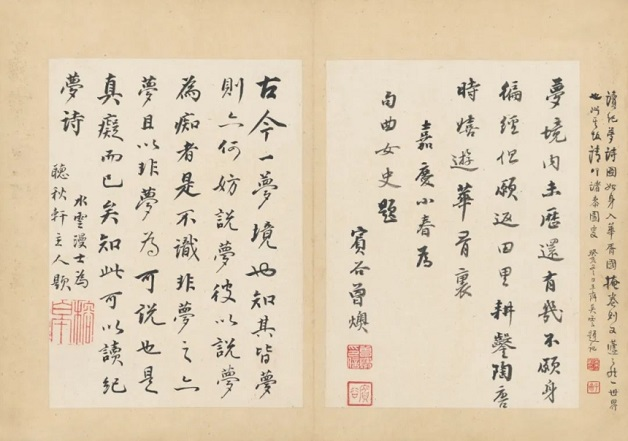
Zeng Ao, Pan Yijun and Wu Yun's inscriptions kept in good condition
THE PIONEER OF THE JINGJIANG SCHOOL
ZHANG YIN
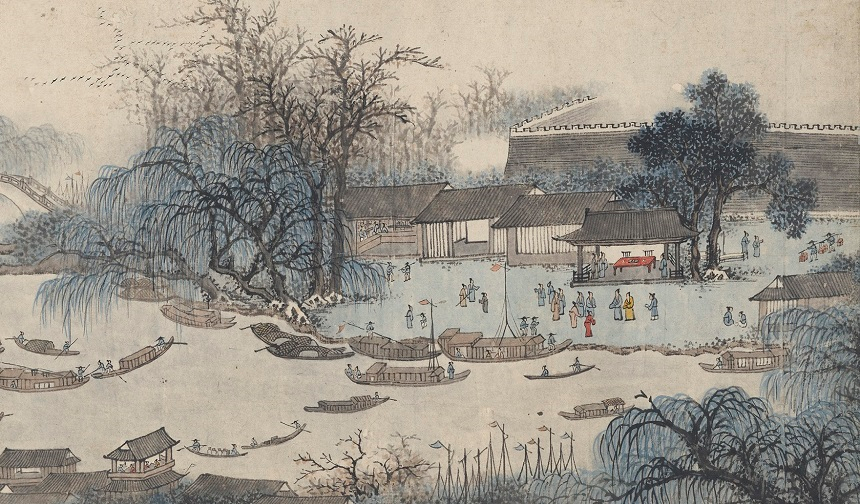
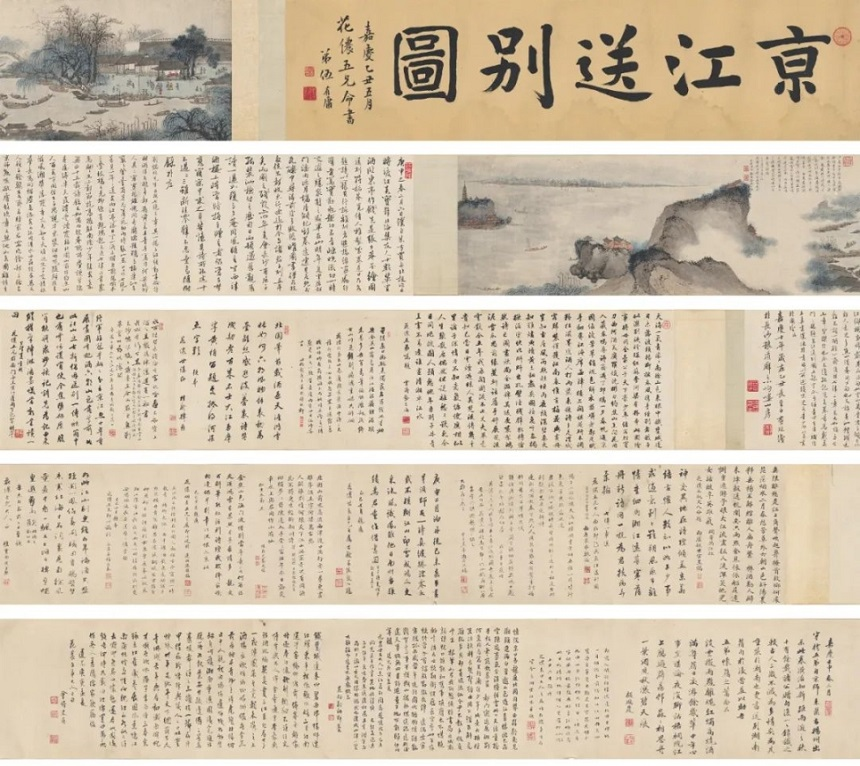
The scroll titled 'Farewell by the River' was meticulously crafted by the artist Zhang Yin for Zha Lin, with extensive inscriptions on the back. Over the course of more than thirty years, Zha Lin devoted careful attention to its preservation. This scroll not only serves as significant historical documentation and witness to the interactions between Zhang and Zha, but also presents a comprehensive portrayal of Zha Lin's deep appreciation for art, his strong sense of loyalty, and a condensed depiction of his life's journey and social connections.
Zha Lin, born into a prestigious family in Shuixi Zhuang, Tianjin, is a descendant of the Zha family. He is the grandson of Governor of Hunan, Zha Li, and the son of Zha Chun, a junior minister in the Grand Court of Judicial Review. His literary pursuits were nurtured under the guidance of Wang Wenzhi.
Xiling Yinshe 2023 Autumn Auction
Zhang Yin Farewell By the River
Ink and color on paper, hand scroll
Dated 1799
Preface: 106.5×26.5cm Painting: 123×27cm
Inscription: 109×28.5cm 161.5×32cm 370×32cm
This scroll, painted by Zhang Yin for Zha Lin, is accompanied by inscriptions from nearly twenty different contributors. After meticulous restoration and additional inscriptions, the scroll, now measuring 8.7 meters in length, has been carefully preserved by Zha Lin for over thirty years. It not only serves as crucial historical documentation and testimony to the interactions between Zhang and Zha but also vividly portrays the sincere friendships among individuals such as Zhang, Zha, Gu, Han, and others. Furthermore, it provides a complete representation of Zha Lin's passion for art and his strong sense of loyalty.
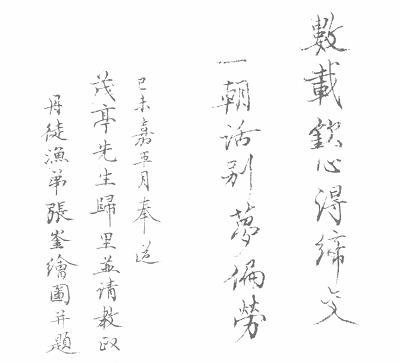
Zha Lin, hailing from a prestigious family, accompanied his father in travels to towns like Suzhou, Wuxi, and Changzhou during his early years, forging connections with local literati. This artwork was completed when Zha Lin, at the age of 18, was about to leave Zhenjiang to return home after traveling north. Zhang Yin, who was involved in compiling the Jiaqing Datu County Gazetteer, created this piece as a farewell gift. The painting depicts friends bidding farewell at the Xijin Ferry, exchanging handshakes and words of parting, with a distant view of Jiaoshan and Jinshan, conveying the poignant emotions of this enduring friendship.
Since his early years, Zha Lin often accompanied his father, Zha Chun, on various travels. According to records, in the fourth month of the fifty-eighth year of the Qianlong era (1793), Zha Chun was appointed as a provincial officer in charge of transportation in Changzhen, Jiangsu. Consequently, from a young age, Zha Lin frequently visited towns such as Suzhou, Wuxi, and Changzhou, establishing connections with prominent literary figures in those areas. He formed mentorship and friendship bonds with local luminaries of the literary scene, including Wang Wenzhi, Liu Duanlin, Zhang Yin, Gu Heqing, and others from Dantu.
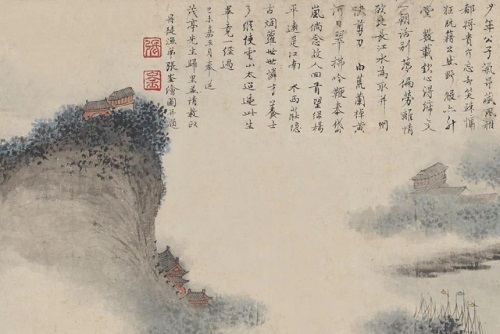
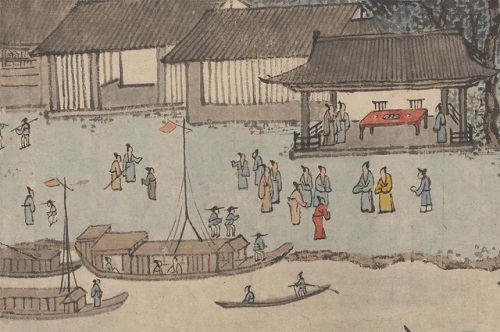
The scene depicts friends at the Xijin Ferry, clasping hands and exchanging heartfelt words, capturing the poignant moment of a fond farewell. In the colophon, Zhang Yin praises Zha Lin's refined and elegant demeanor, expressing that the two of them have forged a deep and cherished friendship over the course of several years, marked by mutual admiration and respect.
Zhang Yin, more than twenty years senior to Zha Lin, established their acquaintance when Zha Lin was still a youth, forming a friendship that transcended their age difference. This painting was created in the twelfth month of the lunar calendar in 1799 when Zhang Yin was 39 years old, and Zha Lin was 18 years old. During this period, Zhang Yin was actively involved in the compilation of the Jiaqing Datu County Gazetteer.
Even more noteworthy is the survival of this painting through adversities, undergoing several years of vicissitudes before its restoration. According to a lengthy inscription added by Zha Lin in 1805, the scroll suffered severe damage during the rain and flood in the capital city in 1801, rendering many inscriptions by notable individuals (such as Liu Duanlin, Zhang Xueren, Bao Wenkui, Dai Sanxi, Gu Heqing, and others from Dantu) unreadable. Only Zhang Yin's contribution remained intact, making it all the more precious.
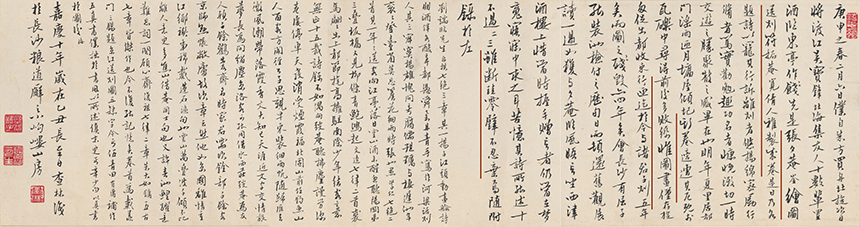
Later, Zha Lin placed this painting in a box, carrying it with him wherever he went, traveling extensively across the north and south. In 1805, he meticulously restored it in Changsha, Hunan, relying on his memory to supplement the damaged inscriptions from the original scroll. During this process, he sought the collaboration of nearly twenty literati, including Han Xiong, Gu Heqing, Song Xiangfeng, Zhang Dunren, and others, demonstrating his utmost dedication.
Of particular significance is the close relationship between Gu Heqing and the Zha family. In his poetic annotations, Zha Lin mentions, 'In the past, I lived with the esteemed elder at Jingjiang, and our days together were never empty.' Furthermore, Zha Lin's father, Zha Chun (renowned as Seal Immortal), played a crucial role in supporting and introducing Gu Heqing to the world of art. With Zha Chun's financial assistance and recommendations, Gu Heqing's artistic skills flourished, his perspective broadened, and he gradually developed the distinctive "Gu Liu" painting style, gaining widespread recognition in the capital within a short span of two to three years.
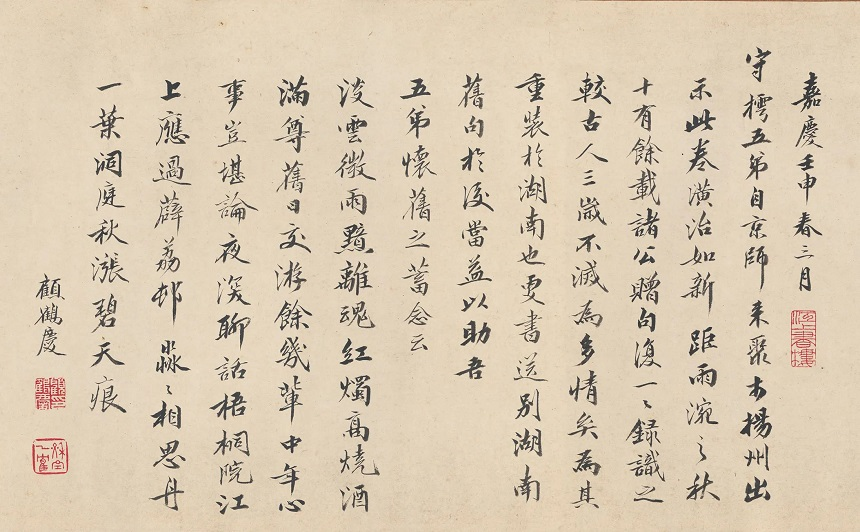
Seven years after the meticulous restoration of this scroll, Gu Heqing provided another inscription. Within the scroll, the harmonious collaboration of Zhang and Gu is exceptionally pleasing to the eye.
Furthermore, among the inscription writers for this scroll, it appears that only Gu Heqing wrote colophons on two occasions. The first inscription was penned before the extensive restoration of the scroll, around 1800, where Gu Heqing expounded on his entry into Beijing through the recommendation of Zha Lin's father, and his stay as a guest in Zha Lin's home. The second inscription was composed seven years after the scroll's thorough restoration, in the spring of 1812. During this time, Gu and Zha reunited in Yangzhou, reminiscing about the past and exchanging nostalgic verses.
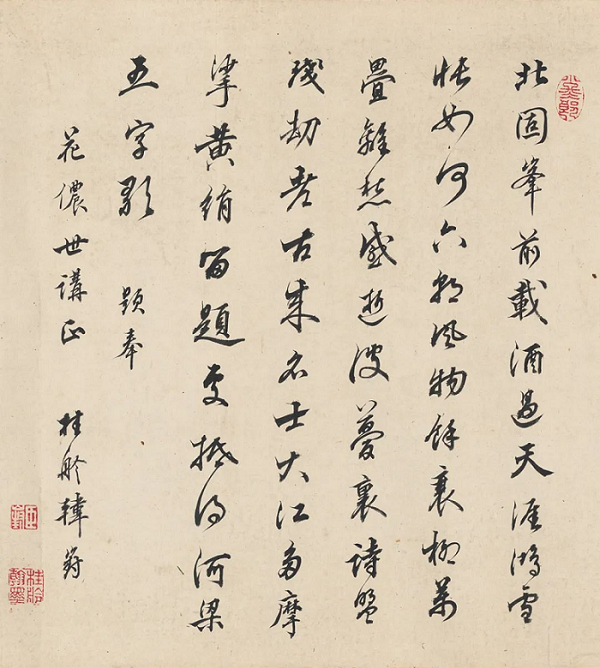
Han Xiong had a close friendship with Zha Chun, and there is evidence of poetic exchanges between Han and Zha Lin, highlighting their camaraderie in the historical records.
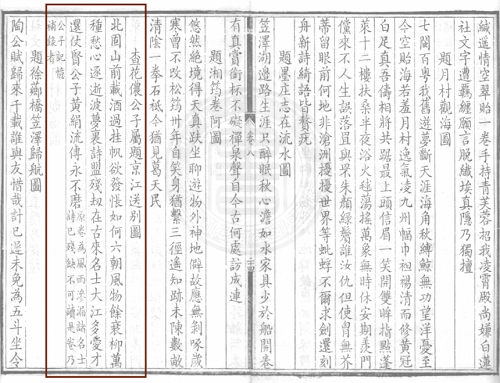
Huan Du Zhai Shi Gao, vol. 8, Han Feng (Qing Dynasty)
Blockprined in 1827 and 1844
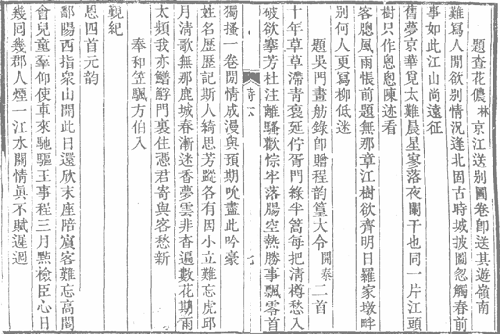
Yi Shan Tang Shi Lu, vol. 6, Song Xiangfeng (Qing Dynasty)
Blockprined in 1818 and Revised in 1825
From the age of eighteen until two years before Zha Lin's passing, spanning over thirty years, this scroll has undergone meticulous restoration and additional inscriptions, now measuring 8.7 meters in length. Zha Lin's profound appreciation for this scroll not only breathed a second life into it but also vividly portrays the sincere friendships among individuals such as Zhang, Zha, Han, and others. Today, these vibrant connections come alive on the pages, displayed for all to see.

Inscription of Zhang Dunren
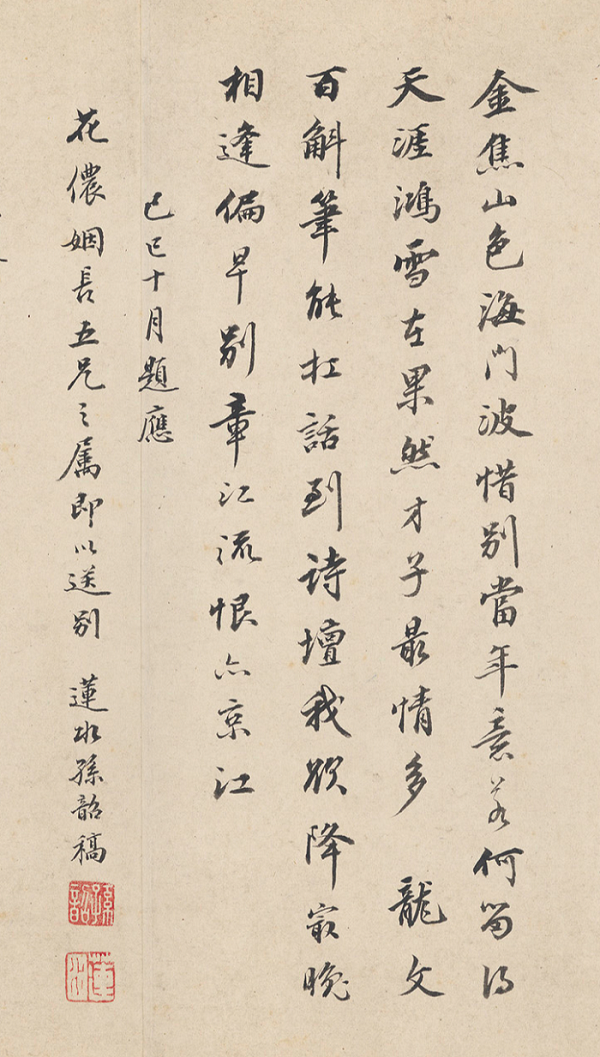
Inscription of Sun Shao

Two large families of the Jingjiang School
Zhang Zikun, Zhang Yin and Zhang Shen
Xiling Yinshe 2023 Autumn Auction
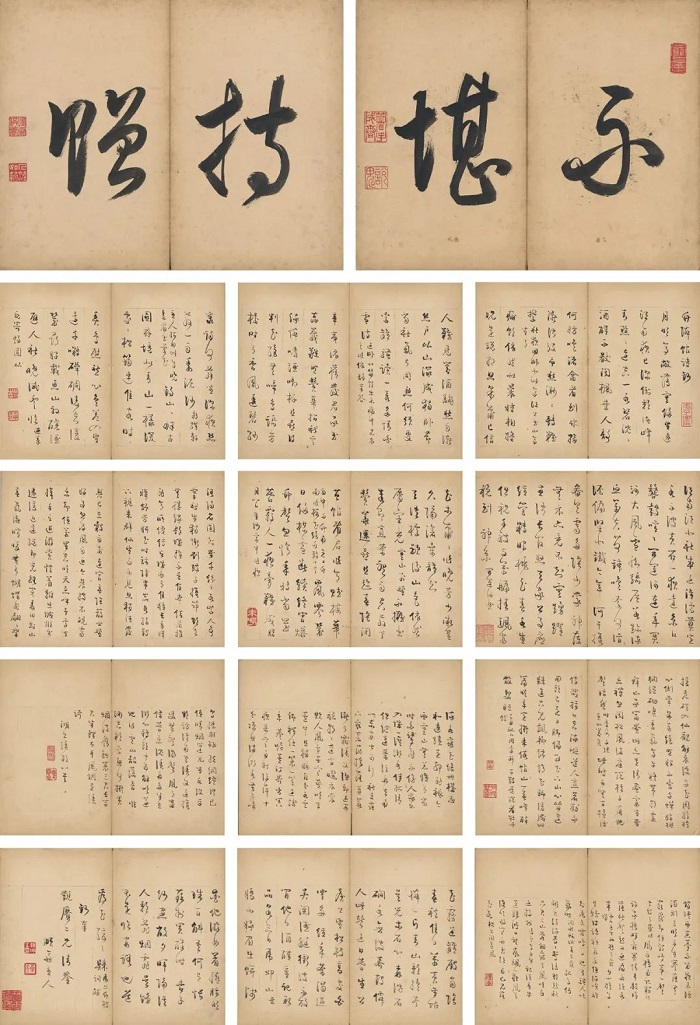
Zhang Zikun (Qing Dynasty) Self-Composed Poems in Cursive Script
Ink on paper, album (twenty-eight pages)
25×15.5cm×28

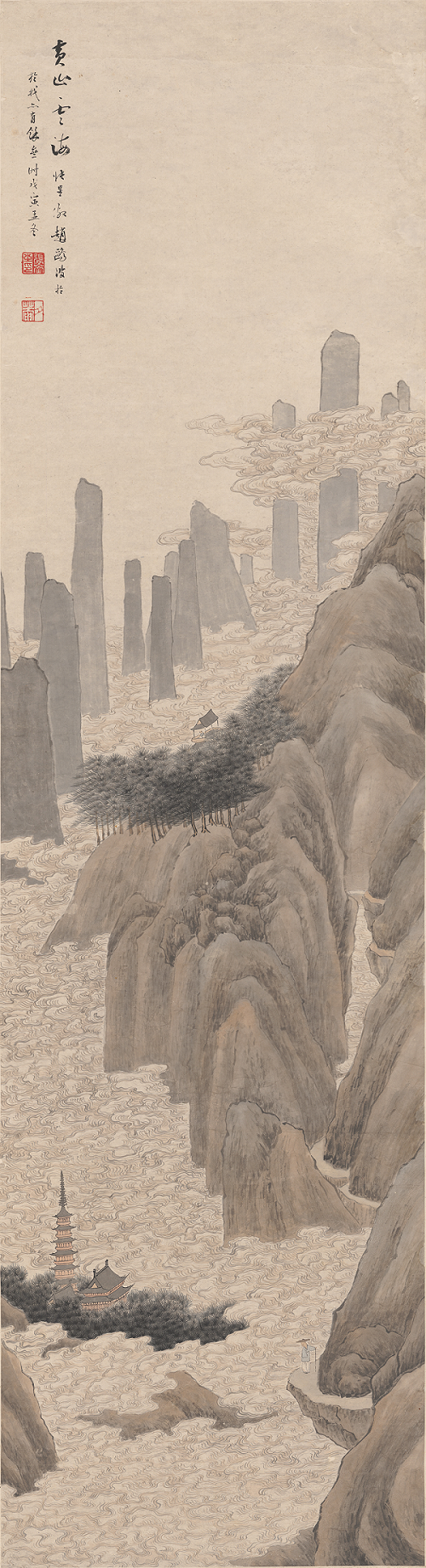
Xiling Yinshe 2023 Autumn Auction
Zhang Yin (1761-1829) Cloud Sea of Mount Huang
Ink and color on paper, hanging scroll
Dated 1818
144×39cm
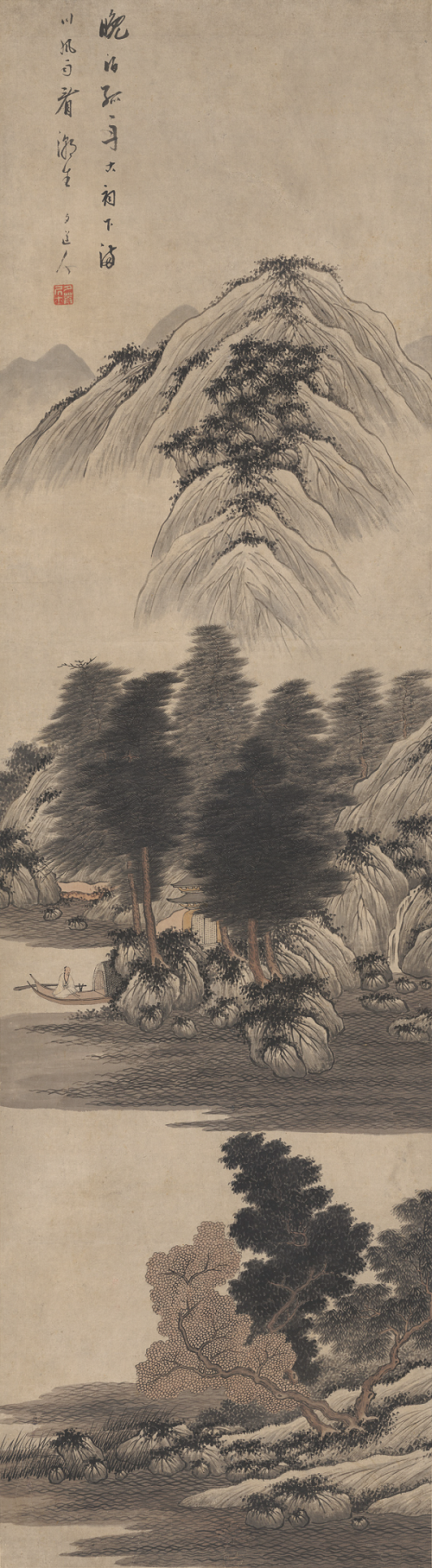
Xiling Yinshe 2023 Autumn Auction
Zhang Yin (1761-1829) Mooring by An Ancient Hall
Ink and color on paper, hanging scroll
158×43.5cm
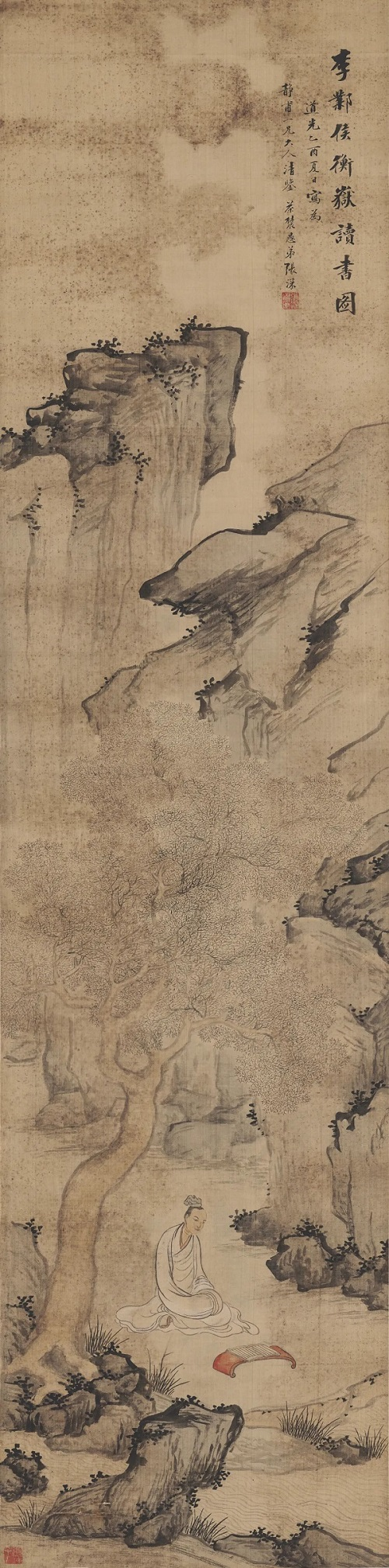
Xiling Yinshe 2023 Autumn Auction
Zhang Shen (Qing Dynasty) Study in the Mount Heng
Ink and color on paper, hanging scroll
Dated 1825
128×31.5cm
TWO LARGE FAMILIES OF THE JINGJIANG SCHOOL
PAN ZHENYI, PAN GONGSHOU, PAN SIMU AND PAN GUI
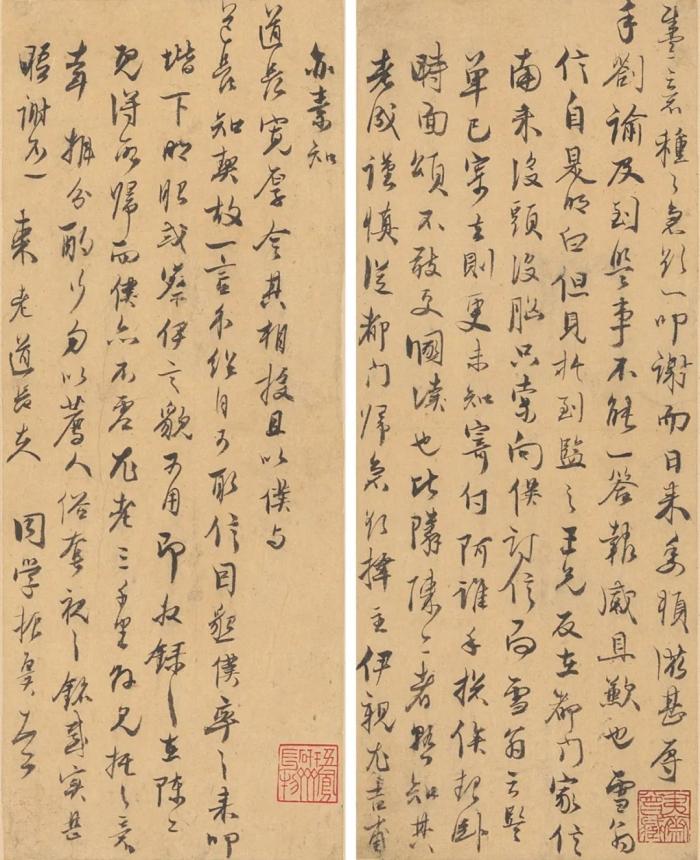
Xiling Yinshe 2023 Autumn Auction
Pan Zhenyi (Qing Dynasty) Letter
Ink on paper, mounted (two pages)
26×10cm×2
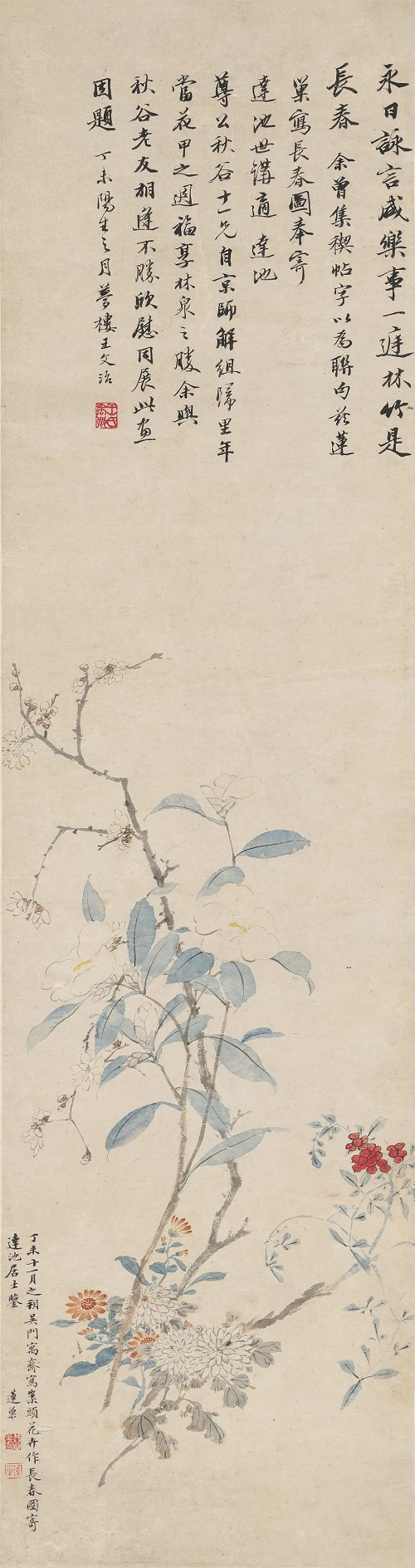
Xiling Yinshe 2023 Autumn Auction
Pan Gongshou (1741-1794) Spring
Ink and color on paper, hanging scroll
109×28.5cm
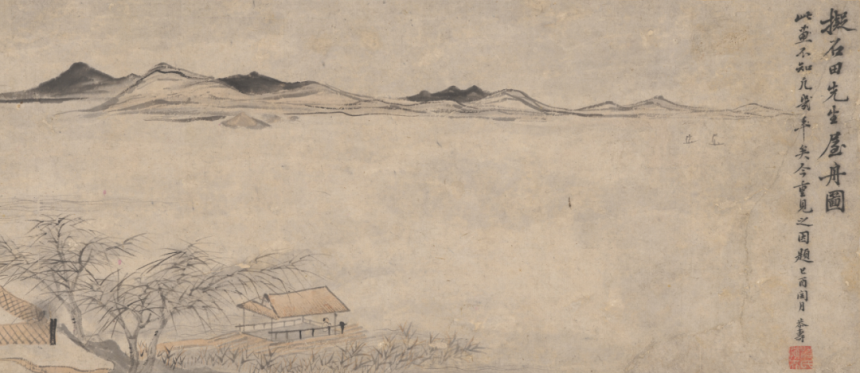
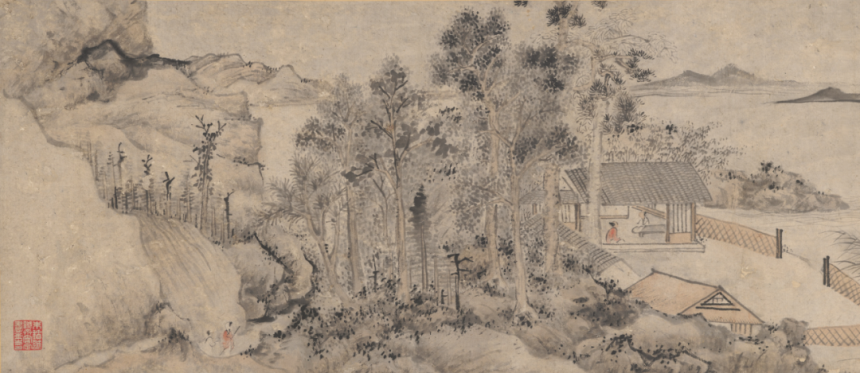
Xiling Yinshe 2023 Autumn Auction
Pan Gongshou (1741-1794) Spring
Ink and color on paper, hanging scroll
129.5×28.5cm
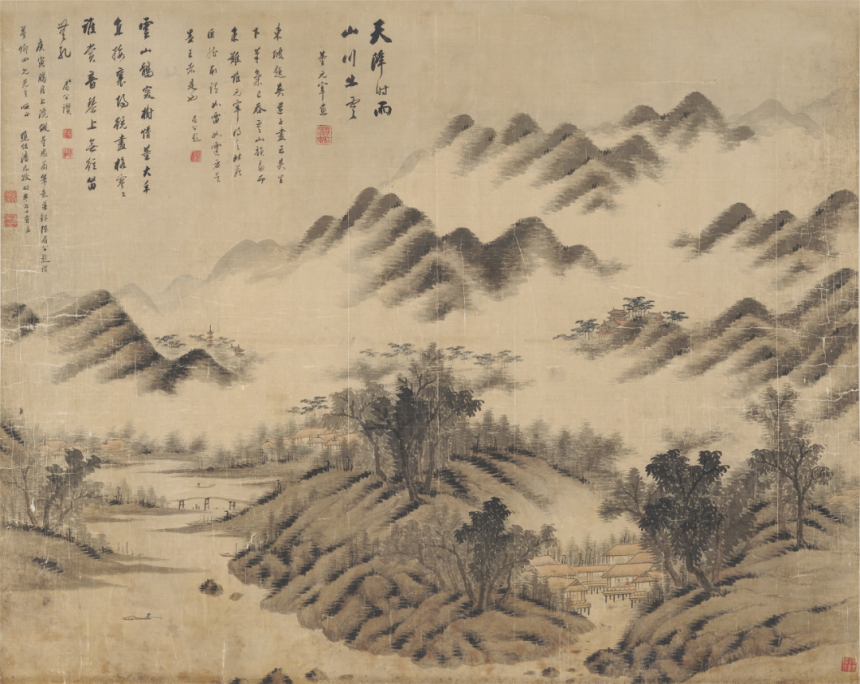
Xiling Yinshe 2023 Autumn Auction
Pan Simu (1756-1843) Landscape after Dong Qichang
Ink and color on silk, mounted
134.5×106.5cm
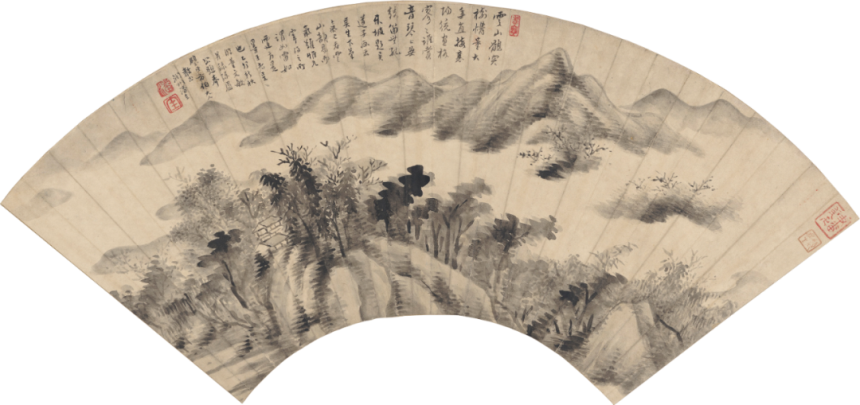
Xiling Yinshe 2023 Autumn Auction
Pan Gui (Qing Dynasty) Village in the Misty Mountain
Ink on silk, mounted
52×19cm
PIONEER OF THE JINGJIANG SCHOOL
WANG WENZHI AND YAN ZHENYI


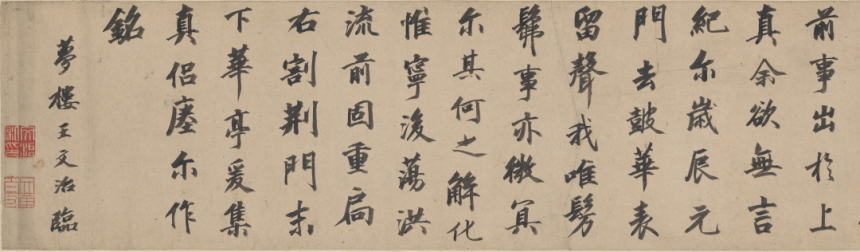
Xiling Yinshe 2023 Autumn Auction
Wang Wenzhi (1730-1802) Calligraphy in Running Script
Ink on paper, hand scroll
217×31cm
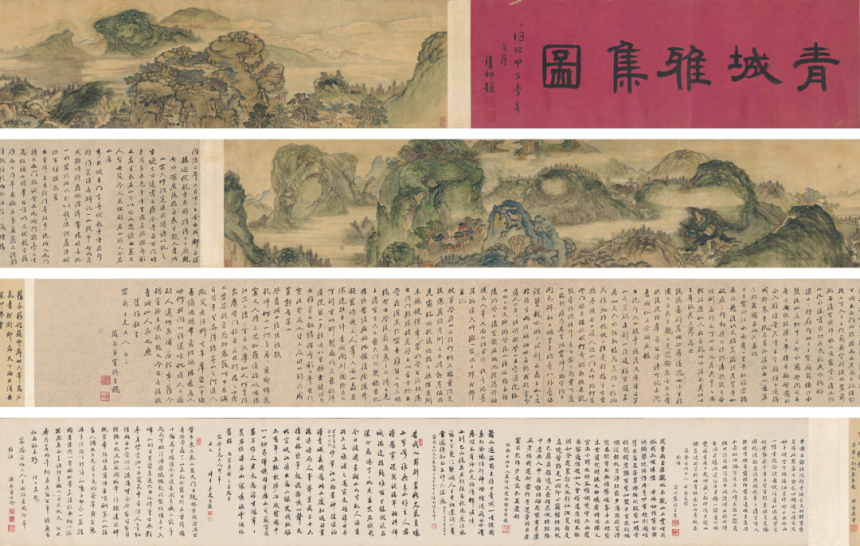
Xiling Yinshe 2023 Autumn Auction
Yan Zhenyi (Qing Dynasty) Scholarly Gathering
Ink and color on silk, hand scroll
Preface: 109.5×36.5cm Unmounted: 332.5×39cm
Inscription: 251.5×31.5cm 35.5×9.5cm 259×41cm
DEVELOPMENT OF THE JINGJIANG SCHOOL
GU HEQING, ZHOU GAO, MING JIAN, ET AL.

Xiling Yinshe 2023 Autumn Auction
Gu Heqing (1766-1830) Scholarly Gathering
Ink on silk, hanging scroll
Dated 1812
136×74cm
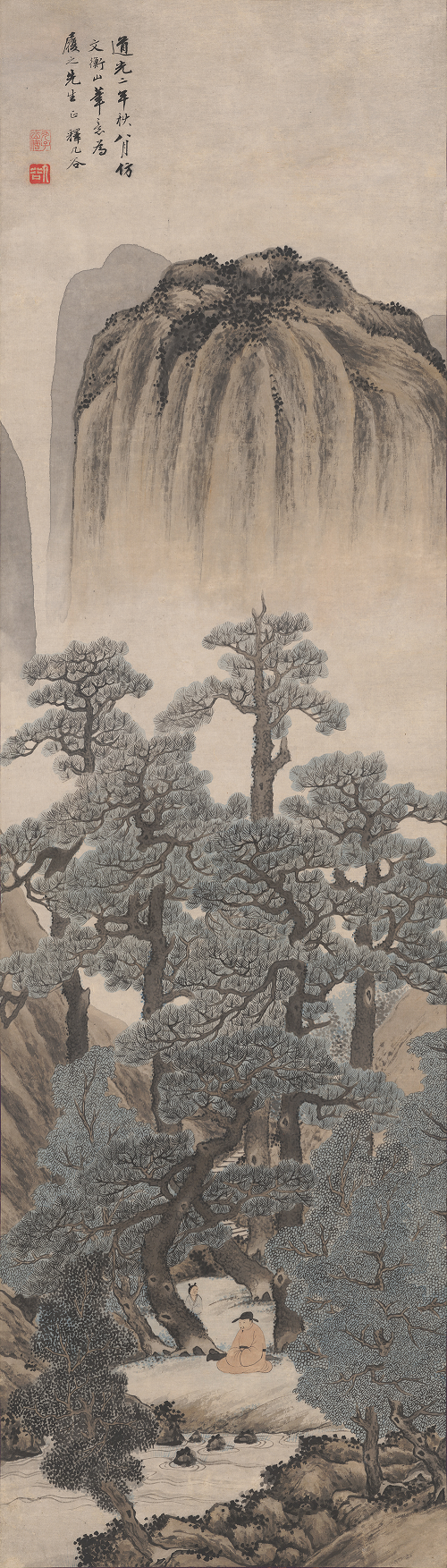
Xiling Yinshe 2023 Autumn Auction
Gu Heqing (Qing Dynasty) Sitting amid Pines
Ink and color on paper, hanging scroll
Dated 1822
163×46cm

Xiling Yinshe 2023 Autumn Auction
Zhou Gao (Qing Dynasty) Landscape after Ni Zan
Ink and color on paper, hanging scroll
Dated 1833
136.5×32cm